

Hello, dear friends,
It’s time! Here is this month’s Field Notes, a collection of interesting things I’ve run across lately related to living well, illness, and healthcare, including:
Vivid examples from Kate Bowler and Frida Kahlo on when we lose the luxury of keeping illness or disability secret
Our biggest survival tool in difficult situations, according to a solo hiker who broke her pelvis on a fall and waited four days in the desert
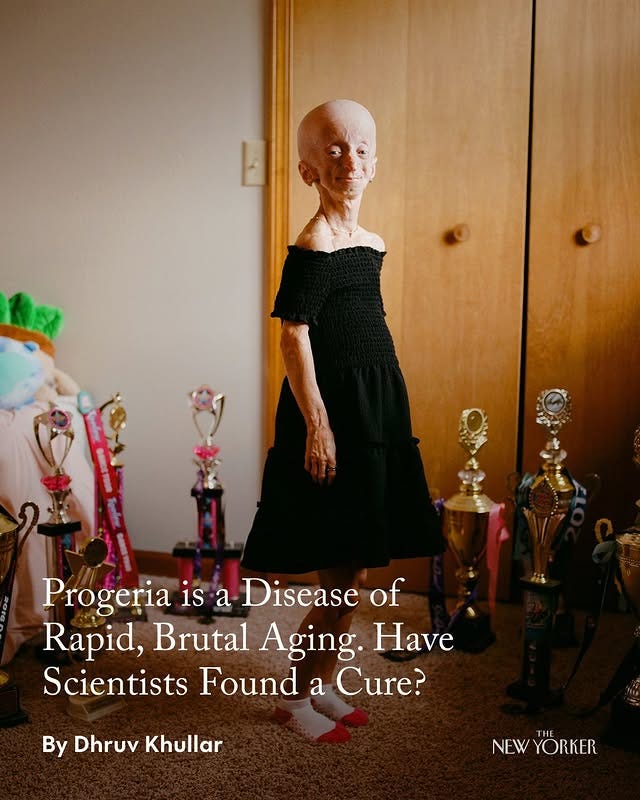
The incredibly rare disease progeria, which ages people very fast, and what we are learning about aging generally
U.S. newborn screening and its infrastructure — plus, look up what conditions your state screens for
Thinking deeply about disability and the questions it poses
One physician’s compassionate note about how we actually create change
A reminder that fragility is not a moral failing but part of our humanness
Just for fun: a homemade neighborhood newspaper about chickens
These reads are all so good. Save this post and dip into it when you need a nourishing read or an escape hatch from scrolling.
Hope you have a gorgeous rest of October!
Take care,
Brianne
When You Can’t Afford Your Secrets Anymore
Kate Bowler writes about how: “When you are laid low—by cancer, by heartbreak, by any of life’s myriad of humiliations—secrets become a luxury you can no longer afford.” Kate is a Duke theology professor and author who was diagnosed with Stage IV colon cancer and ended up writing several fantastic books about her experience, including Everything Happens for a Reason: And Other Lies I’ve Loved.
We all like to keep some things private.
But sometimes … we can’t.
Kate knows this feeling acutely. And so did artist Frida Kahlo.
Kate writes:
“Frida wanted to feel beautiful and full of vitality. She wanted to be the wife her husband adored. But none of that was possible anymore.
“It was 1953, and she was desperately in love with her husband Diego Rivera, a fellow artist who was both terrible and mesmerizing. She had just received medical news that she had to have her leg amputated…and the letter that she wrote to her husband Diego in those surreal moments before the surgery is so spectacular that it ought to be read in full.
“Buckle up. It’s that good.”
Read the full post from Kate with Frida’s frank and startling letter.
‘After four days lying in the desert I was ready to die’: On piss, survival and being alone
Interview with a friend who broke her pelvis on a solo hike
Claire Nelson was hiking alone in Joshua Tree Park in California in 2018 when she fell and shattered her pelvis. There was no cell phone service. She was off the trail path and there were no other hikers around. This is an interview with her friend Eva Wiseman where she recounts the four days alone in the desert. I couldn’t stop reading it. And, of course, there are bits in it that are applicable to other low moments in life, too. At one point, Claire says:
“I’m now a huge believer that hope is actually our biggest survival tool. The mind needs hope and the body follows it. And so, to keep myself going, I knew I had to keep my head in a good space.”
Read the full post.
Did You Know Newborn Screening Lost Its Federal Oversight?
This fascinating post by Unbiased Science details newborn screening and the invisible infrastructure that has made these efforts possible (and now faces a new challenge.)
“Imagine you’re a new parent, cradling your baby in the hospital room. Amid the whirlwind of emotions and checkups, a nurse gently pricks your newborn’s heel and collects a few drops of blood. It’s quick, quiet, and often overlooked, but this small test is part of a powerful public health program that has saved thousands of lives.
Read the full post.
Bonus: Baby’s First Test website lists the baby tests for each state. I was surprised how much they varied. For example: Virginia screens for 35 conditions in newborns; New York screens for 60 conditions.
Disability As Disruption, Question, Prompt
Rebekah Taussig shares the questions that inspire her to write.
“I know, I know, so often questions are asked of disability – what happened to you? Why are you in that wheelchair? Have you tried leafy green vegetables? These questions are like little plastic moles popping their heads up in an arcade game. You pay a quarter to play. They’re built to be smashed. They’re not generative, juicy, fruitful.
“Disability asks questions that go beneath underground power lines. They go further back where the fossils rest and watch from someplace in the distant future when our great grandchildren wonder why we did what we did.
Rebekah notes that disability asks bigger questions like
“What are we to each other?” and “What is failure”?” and “What is the story?”
This whole-hearted deep-thinking dive on disability is so worth a read, and not least because Rebekah shares Norman Kunc’s definition: “Ableism is the belief that humans should be non-disabled.”
Read that again.
Then read the full post.
Showing Up Fragile
Michelle Spencer (she/her) of the newsletter Armchair Rebel has the loveliest short post about being fragile, being courageous, and needing some Vitamin F (F for Fun). I love this term — don’t we all need more Vitamin F?
Michelle writes:
I am fragile, and my fragility is not a moral failing, merely one facet of the human experience.
I need to witness and affirm myself knowing this. Maybe you do too?
Read the full post.
How an Ultra-Rare Disease Accelerates Aging
Teenagers with progeria have effectively aged eight or nine decades. A cure could help change millions of lives—and shed light on why we grow old.
This story by Dhruv Khullar details progeria, an incredibly rare disease that causes people to age very fast, and what we’ve learned so far. Only about 20 people in the U.S. have progeria and a few hundred in the world. With compelling human stories mixed with scientific advancements this is the classic long and engrossing read that The New Yorker does so well. I also now want to watch the documentary Life According to Sam, which chronicles the experience of Sam Berns, who had progeria.
The September self-love your new habits need
Yes, it’s October, but this post is timeless, because we humans are, all the time, trying to adopt better habits.
Tanmeet Sethi, MD writes:
So what’s the secret to change?
Willpower?
Grit?
Sheer luck perhaps?Nope, no and no again. The key is something you will dismiss, but hear me out.
LOVE.
Specifically self-love. Self-compassion.
The neuroscience is clear. The more loving and gentle you are with yourself, the MORE LIKELY you are to stick with any change you’re trying to make.
I mean, who doesn’t need to read this?
Just for Fun:
The Time Has Come to Talk About Coop News
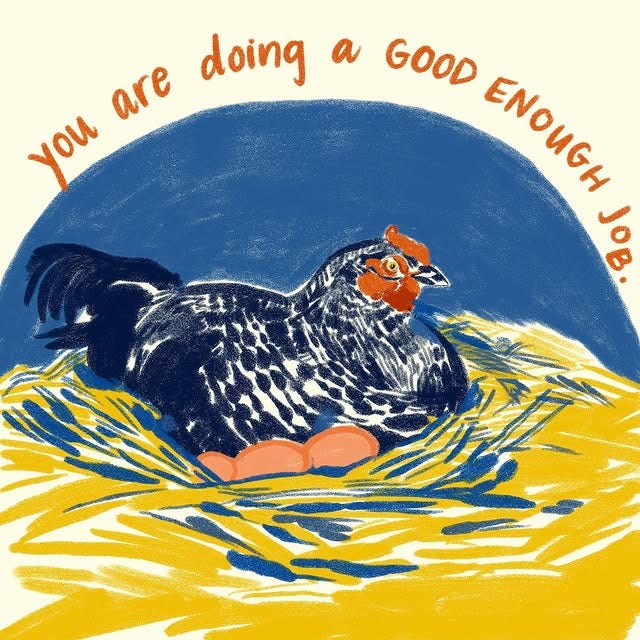
Just for fun — maybe your dose of Vitamin F? — Sophie Lucido Johnson of the terrific newsletter You Are Doing A Good Enough Job tells us all about her chickens and the neighborhood newspaper she makes about them, which is called Coop News. As a former newspaper editor and fan of community and chickens, I don’t think I could love this more.
Read the delightful post.
(Sophie also draws chickens and birds and New Yorker cartoons, as seen above from her marvelous Instagram.)


What a fantastic gathering! I'm honored to be tucked into the lineup💛 And glad for a chance to keep sharing that Norman Kunc definition of ableism!🤯
Beautiful post - you’ve found some real gems. I’ll definitely be digging in more. And that ableism definition…oof. Nails it.